

 Residential Energy Storage Solutions
 Commercial & Industrial BESS Solutions
 Residential Energy Storage System
 Commercial & Industrial BESS
 Residential Inverter
 Deep Cycle LiFePO4 Battery
 Datasheet
 Warranty
 FAQ
FAQ Videos
 Technical Support
 Contact Us
 News
News Webinars
 Events
What Makes a BESS “VPP-Ready”?
As battery energy storage systems (BESS) become increasingly common across residential, commercial, and utility-scale applications, a new term is appearing more frequently in project specifications and utility programs: VPP-ready.
For developers, EPCs, utilities, and energy investors, simply installing a battery is no longer enough. Increasingly, energy storage assets are expected to do more than provide backup power or reduce electricity bills. They are expected to interact with the grid, respond to market signals, and generate additional value through participation in Virtual Power Plants (VPPs).
But what does "VPP-ready" actually mean? Is it simply a software feature? A communication protocol? Or does it require a completely different approach to battery system design?
In this article, we'll explore what makes a BESS truly VPP-ready, the technical requirements behind successful VPP participation, and why these capabilities are becoming increasingly important for future energy storage projects.
1. Why Virtual Power Plants Are Gaining Momentum
The energy industry is undergoing a fundamental transformation. As renewable energy penetration continues to increase, grid operators face new challenges related to intermittency, peak demand, and grid stability. Traditional centralized power plants are no longer the only solution for balancing electricity supply and demand.
Instead, distributed energy resources (DERs)—including solar PV, battery storage, EV chargers, and controllable loads—are being connected and coordinated through Virtual Power Plants.
According to the U.S. Department of Energy, Virtual Power Plants aggregate distributed energy resources and manage them as a unified resource capable of providing grid services and participating in electricity markets.
At the same time, the International Energy Agency (IEA) has highlighted the growing need for flexible resources that can help utilities manage increasing electricity demand while supporting renewable energy integration.
This is where battery storage plays a critical role. However, not every battery can participate effectively in a VPP.
A VPP-ready battery must possess specific hardware, software, communication, and operational capabilities that allow it to function as part of a larger energy ecosystem.
2. Key Requirements for a VPP-Ready Battery
A VPP-ready BESS must combine hardware, software, and operational capabilities to participate reliably in aggregated grid services.
2.1 Real-Time Communication and Control
The system must communicate with the VPP platform in real time, supporting protocols such as Modbus TCP/IP, CAN, and cloud-based APIs. This allows rapid dispatch, remote monitoring, and automated response to grid events.
2.2 Advanced EMS Intelligence
An intelligent Energy Management System (EMS) is essential for optimizing battery operation. It manages charge/discharge schedules, forecasts loads and renewable generation, responds to dynamic pricing, and ensures reliable backup power. In Kowint’s KS-233A VPP solution, EMS integrates load forecasting, dynamic tariff response, and real-time optimization.
2.3 Scalable Aggregation
A single battery rarely provides enough capacity for market participation. VPP-ready systems must support aggregation across multiple sites, including commercial and residential batteries, solar PV, and EV charging infrastructure, allowing coordinated operation and participation in energy markets.
2.4 Compliance and Reliability
BESS must comply with grid interconnection and safety standards such as UL1973, UL9540A, and IEEE 1547. Reliability features—including thermal management, fault detection, and high availability—ensure the system consistently delivers value in VPP programs.
3. How a VPP-Ready BESS Generates Value
By combining these capabilities, a VPP-ready BESS can create multiple revenue streams:
- Demand Response: Compensation for reducing grid load during peak events
- Energy Arbitrage: Charge during low-price periods and discharge when prices are high
- Capacity and Ancillary Services: Contribute to grid stability and reserve capacity
- Shared Revenue in Community VPPs: Aggregated resources allow multiple stakeholders to share financial benefits
4. The Future of Energy Storage Is Connected
The next generation of battery energy storage systems will be judged not only by their capacity and power ratings but also by their ability to communicate, coordinate, and create value beyond a single installation.
A VPP-ready battery is no longer simply an energy storage device. It becomes part of a larger, intelligent energy network capable of supporting the grid, integrating renewable energy, and generating new revenue streams.
For project developers and energy investors, choosing a VPP-ready BESS today may be the difference between a battery that simply stores energy and a battery that actively participates in the future energy economy.
About Kowint Energy
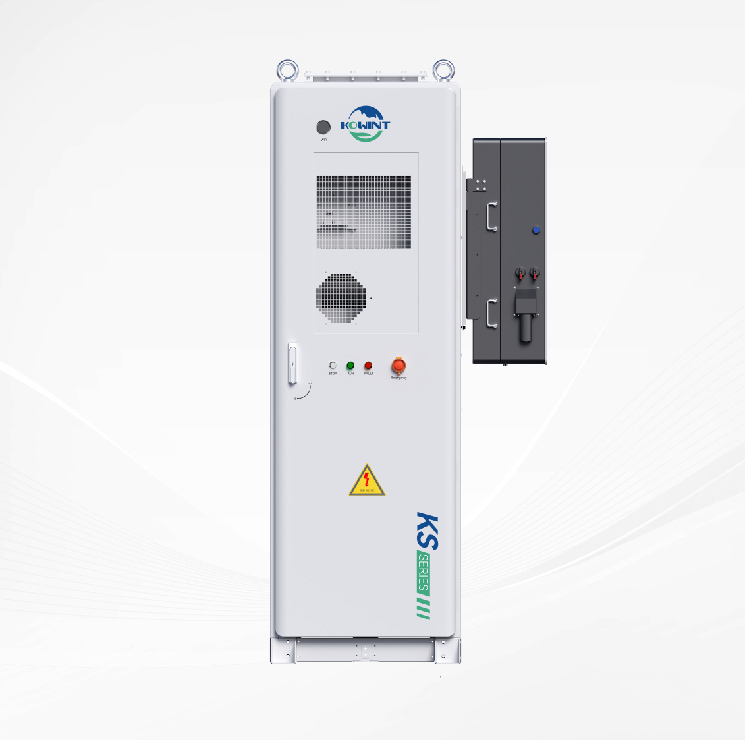
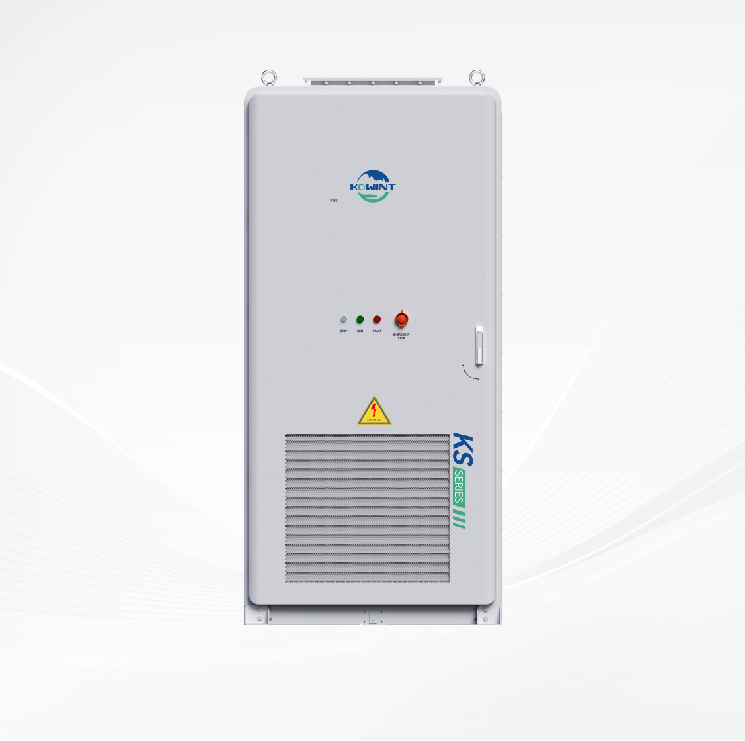
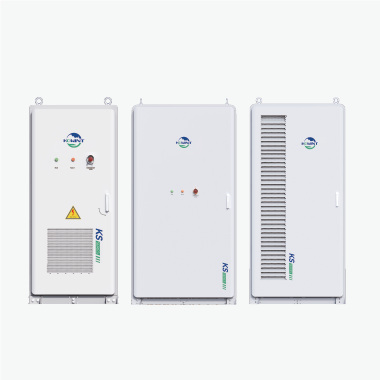
Kowint Energy provides commercial and industrial BESS solutions designed for peak shaving, demand charge reduction, and VPP participation. Our KS-233A and S40K exemplifie scalable, intelligent, and market-ready energy storage systems, enabling businesses to maximize operational efficiency and unlock new revenue opportunities.
www.kowint.com | info@kowint.com